film

Film Review - The Echo of Pain of the Many (2011, documentary)

A powerful, personal story of state-sponsored terror in Guatemala and the lasting effects it has had on families, “The Echo of Pain of the Many” is a timely testament to the brave, untiring efforts of Guatemalans to demand justice and dent the country’s long-standing veil of impunity.

Introducing the film at a London screening on Wednesday, director Ana Lucia Cuevas explained that the title derives from the fact that her own story reflects the painful experience of many thousands of Guatemalans during the country's decades-long armed conflict. In 1984, her activist student brother Carlos was abducted at the hands of the state. His forced disappearance (and subsequent torture and murder), like that of countless other Guatemalan civilians classed as sympathetic to leftist guerrillas, or anyone seeking change, was the product of a deliberate governmental policy of terrorising the population—a policy supported with money, arms and training from the Reagan administration.

Living abroad in exile for over a decade, it was only in 1999 that Cuevas found out her brother had in fact been killed three months after he was kidnapped. She learned this through the release of an astonishing document—the so-called "death squad dossier" listing with cold bureaucratic precision all the alleged subversives whom the military had abducted, with cryptic annotations marking those who had been killed. “Until then, I’d thought he might still be alive”, Cuevas said in an interview.

Guatemala on Democracy Now

Two pieces on Democracy Now were broadcast recently regarding Guatemala. The first one features Jennifer Harbury and discusses, among other things, the first round of the Presidential elections and the role of Otto Pérez Molina in the disappearance of her husband, Efraín Bámaca. The second piece features Pamela Yates and Fredy Peccerelli and there is a discussion regarding Pamela’s film, ‘Granito: How to Nail a Dictator’, which features both prominently. There is also a discussion on the Fredy’s work with FAFG.

Both pieces are well worth watching.

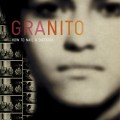
Granito: How to Nail a Dictator

granito

I went to see the new film by Pamela Yates, who made the widely acclaimed When the Mountains Tremble in 1982. Twenty five years later, she revisits the genocide as, for the first time, indictments are called against the perpetrators. Much of the footage shot is a record of the events in Guatemala in the early 1980s as General Ríos Montt conducts Plan Sofia – the carefully orchestrated military destruction of indigenous life and culture in the highlands of Guatemala.

Resulting from an incredible twist of fate, Yates was allowed to shoot the only known footage of the army as it carried out the genocide. Now this footage has become part of the evidence against those responsible for war crimes. Granito is also a record of Yates’ personal journey in going back to Guatemala and revisiting When the Mountains Tremble and rekindles her hope that justice may at last be done. The film includes much testimony from some leading protagonists in the struggle for justice in Guatemala, the US and Spain.

Human Rights Watch Film Festival

The Human Rights Watch Film Festival returns to London on 23rd March until 1st April and features two films on Guatemala, both directed by Pamela Yates.

When the Mountains Tremble was filmed in 1982. “In the early 1980s, death squads roamed the Guatemalan countryside in a war against the unarmed indigenous population that went largely unreported in the international media. Filmmakers Pamela Yates and Newton Thomas Sigel threw themselves into the task of bringing the crisis to the world’s attention by making a documentary that took them into remote areas of the country where civilian massacres were taking place. Central to their story is Rigoberta Menchú, a Maya indigenous woman who was spurred into radical action by the murders of her father and two brothers.”

“Part political thriller, part memoir, Granito takes us through a haunting tale of genocide and justice that spans four decades, two films, and filmmaker Pamela Yates’s own career. Granito is a story of destinies joined together by Guatemala’s past and of how a documentary film from 1982, When the Mountains Tremble, emerges as an active player in the present by becoming forensic evidence in a genocide case against a military dictator. In an incredible twist of fate, Yates was allowed to shoot the only known footage of the army as it carried out the genocide. Twenty-five years later, this footage becomes evidence in an international war crimes case against the very army commander who permitted Yates to film. Irrevocably linked by the events of 1982, each of the film’s characters is integral to the country’s reconstruction of a collective memory, the search for truth, and the pursuit of justice.”

‘La isla – Archives of a Tragedy’

'La Isla' poster

“From behind protective masks, almost two hundred, mostly young people look through and clean stacks upon stacks of papers and documents at long tables in a cold and run down building in Guatemala City. The mountains of folders are one of the most unbelievable findings in Latin American history.”

We have touched on here about the discovery of the police archives following a large explosion which revealed these archives despite the state’s assurance that they did not exist. The filmmaker, Uli Stelzner, has made a film called ‘La isla – Archives of a Tragedy’ to tell the story of the archives and the work being carried out to uncover the truth about the brutality endured by the Guatemalan people. The film had its premiere in Guatemala City recently.

There’s more on Uli’s iskacine website, and there is this article, in Spanish, from Alesia Martínez. I must admit not knowing about periodimohumano but it certainly appears a site worth knowing.

'La isla' is a film that is eagerly awaited here in the UK. In the meantime, you can view the trailer here:


Subscribe to RSS - film